The dog (Canis familiaris or Canis lupus familiaris)
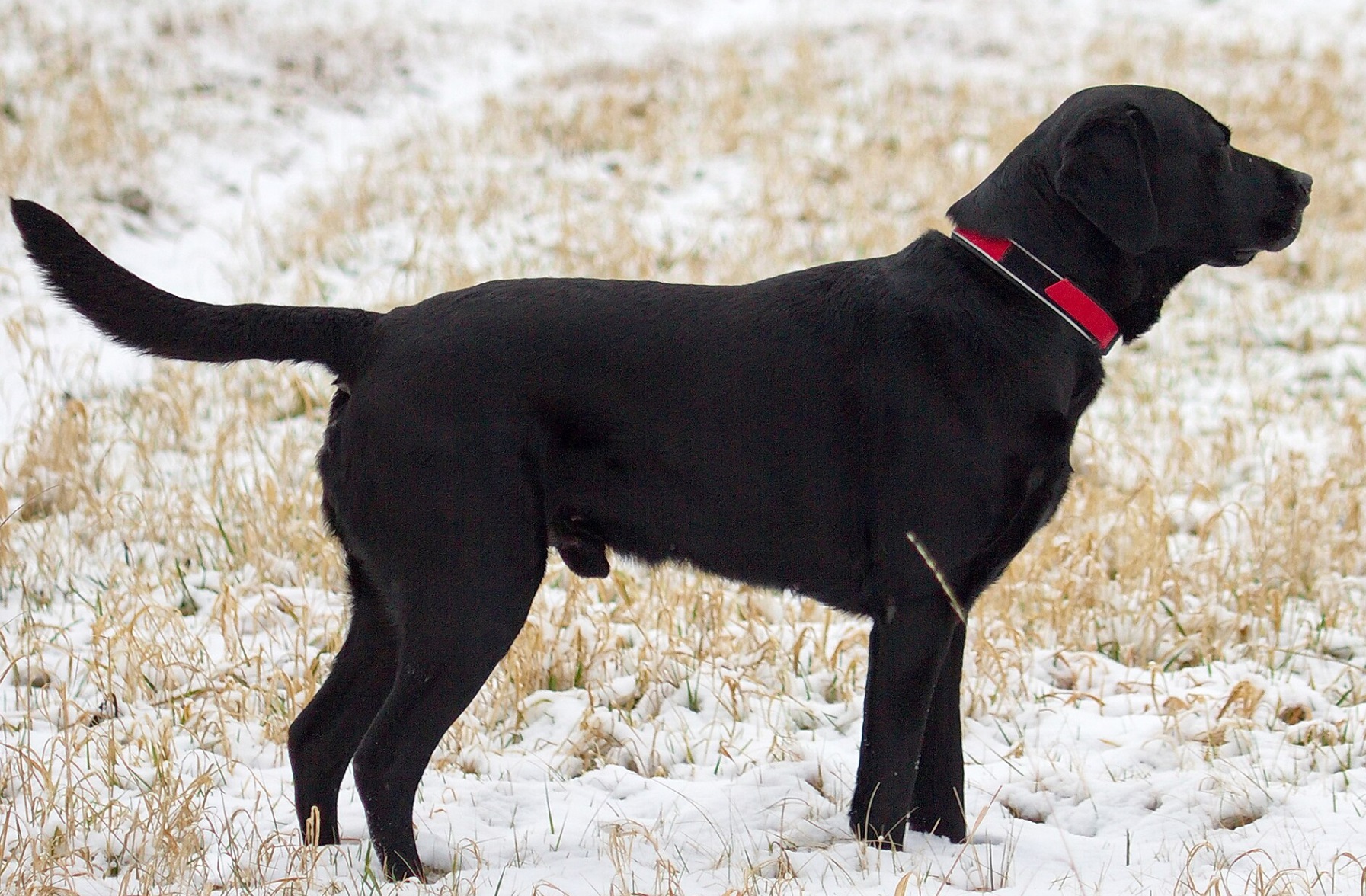
The dog (Canis familiaris or Canis lupus familiaris) is a domesticated descendant of wolves. Also called the domestic dog, it was selectively bred during the Late Pleistocene by hunter-gatherers. Dogs and the modern gray wolf share a common ancestor.[4] Dogs were the first species to be domesticated over 14,000 years ago, before the development of agriculture, though genetic studies suggest the domestication process may have begun over 25,000 years ago. Due to their long association with humans, dogs have gained the ability to thrive on a starch-rich diet that would be inadequate for other canids.
Dogs have been bred for desired behaviors, sensory capabilities, and physical attributes. Dog breeds vary widely in shape, size, and color. They have the same number of bones (with the exception of the tail), powerful jaws that house around 42 teeth, and well-developed senses of smell, hearing, and sight. Compared to humans, dogs possess a superior sense of smell and hearing, but inferior visual acuity. Dogs perform many roles for humans, such as hunting, herding, pulling loads, protection, companionship, therapy, aiding disabled people, and assisting police and the military.
Communication in dogs includes eye gaze, facial expression, vocalization, body posture (including movements of bodies and limbs), and chemical communication (scents, pheromones, and taste). They mark their territories by urinating on them, which is more likely when entering a new environment. Over the millennia, dogs have uniquely adapted to human behavior; this adaptation includes being able to understand and communicate with humans. As such, the human–canine bond has been a topic of frequent study, and dogs' influence on human society has given them the sobriquet of "man's best friend".
The global dog population is estimated at 700 million to 1 billion, distributed around the world. The dog is the most popular pet in the United States, present in 34–40% of households. Developed countries make up approximately 20% of the global dog population, while around 75% of dogs are estimated to be from developing countries, mainly in the form of feral and street dogs.
Taxonomy
Dogs, wolves, and dingoes have sometimes been classified as separate species.[7] In 1758, the Swedish botanist and zoologist Carl Linnaeus assigned the genus name Canis (which is the Latin word for "dog")[14] to the domestic dog, the wolf, and the golden jackal in his book, Systema Naturae. He classified the domestic dog as Canis familiaris and, on the next page, classified the grey wolf as Canis lupus.[2] Linnaeus considered the dog to be a separate species from the wolf because of its upturning tail (cauda recurvata in Latin term), which is not found in any other canid.[15] In the 2005 edition of Mammal Species of the World, mammalogist W. Christopher Wozencraft listed the wolf as a wild subspecies of Canis lupus and proposed two additional subspecies: familiaris, as named by Linnaeus in 1758, and dingo, named by Meyer in 1793. Wozencraft included hallstromi (the New Guinea singing dog) as another name (junior synonym) for the dingo. This classification was informed by a 1999 mitochondrial DNA study.[3]
The classification of dingoes is disputed and a political issue in Australia. Classifying dingoes as wild dogs simplifies reducing or controlling dingo populations that threaten livestock. Treating dingoes as a separate species allows conservation programs to protect the dingo population.[16] Dingo classification affects wildlife management policies, legislation, and societal attitudes.[17] In 2019, a workshop hosted by the IUCN/Species Survival Commission's Canid Specialist Group considered the dingo and the New Guinea singing dog to be feral Canis familiaris. Therefore, it did not assess them for the IUCN Red List of threatened species.[18]
Domestication
DNA sequences show that all ancient and modern dogs share a common ancestry and descended from an ancient, extinct wolf population that was distinct from any modern wolf lineage. Some studies have posited that all living wolves are more closely related to each other than to dogs,[25][23] while others have suggested that dogs are more closely related to modern Eurasian wolves than to American wolves.[26]
The dog is a domestic animal that likely travelled a commensal pathway into domestication (i.e. humans initially neither benefitted nor were harmed by wild dogs eating refuse from their camps).[24][27] The questions of when and where dogs were first domesticated remains uncertain.[21] Genetic studies suggest a domestication process commencing over 25,000 years ago, in one or several wolf populations in either Europe, the high Arctic, or eastern Asia.[28] In 2021, a literature review of the current evidence infers that the dog was domesticated in Siberia 23,000 years ago by ancient North Siberians, then later dispersed eastward into the Americas and westward across Eurasia,[19] with dogs likely accompanying the first humans to inhabit the Americas.[19] Some studies have suggested that the extinct Japanese wolf is closely related to the ancestor of domestic dogs.[26]
In 2018, a study identified 429 genes that differed between modern dogs and modern wolves. As the differences in these genes could also be found in ancient dog fossils, these were regarded as being the result of the initial domestication and not from recent breed formation. These genes are linked to neural crest and central nervous system development. These genes affect embryogenesis and can confer tameness, smaller jaws, floppy ears, and diminished craniofacial development, which distinguish domesticated dogs from wolves and are considered to reflect domestication syndrome. The study concluded that during early dog domestication, the initial selection was for behavior. This trait is influenced by those genes which act in the neural crest, which led to the phenotypes observed in modern dogs.[29]